|
In today’s work environment, which increasingly demands constant focus, rapid responsiveness, and the ability to perform under pressure, solutions that support employee wellbeing are becoming more important than ever. Workplace ergonomics plays a key role in this process. Concepts such as sit-and-stand working, alternating between sitting and standing positions, as well as active sitting, which engages postural muscles, help reduce muscle tension and improve circulation, contributing to relaxation and better concentration.
When discussing ergonomics in the context of employee wellbeing, it is important to adopt a holistic approach that also considers users’ sensory and emotional needs.
This is particularly relevant for neurodivergent individuals – including people on the autism spectrum, those with ADHD or individuals with high sensory sensitivity – who often perceive environmental stimuli more intensely and may experience overstimulation more quickly in traditional office settings. In this context, rocking movement and the possibility of gentle swaying can be seen as elements of ergonomics that support nervous system regulation.

Rocking for Calm and Focus
Rocking motion, commonly associated with childhood, can also have highly beneficial effects on adults. Research on vestibular stimulation shows that gentle rocking may help reduce stress levels, improve concentration, and enhance sleep quality.
Studies published in the Journal of Clinical and Diagnostic Research* have also shown that regular vestibular stimulation may contribute to lowering cortisol levels and positively affect physiological parameters associated with stress and bodily tension, such as blood pressure and heart rate.

The vestibular system is responsible not only for maintaining balance, but also for regulating nervous system arousal. This means that the natural rocking movement experienced while using rocking chairs, swings, or balancing seats may have a calming effect on the nervous system and support overall relaxation.

What Does This Look Like in Practice?
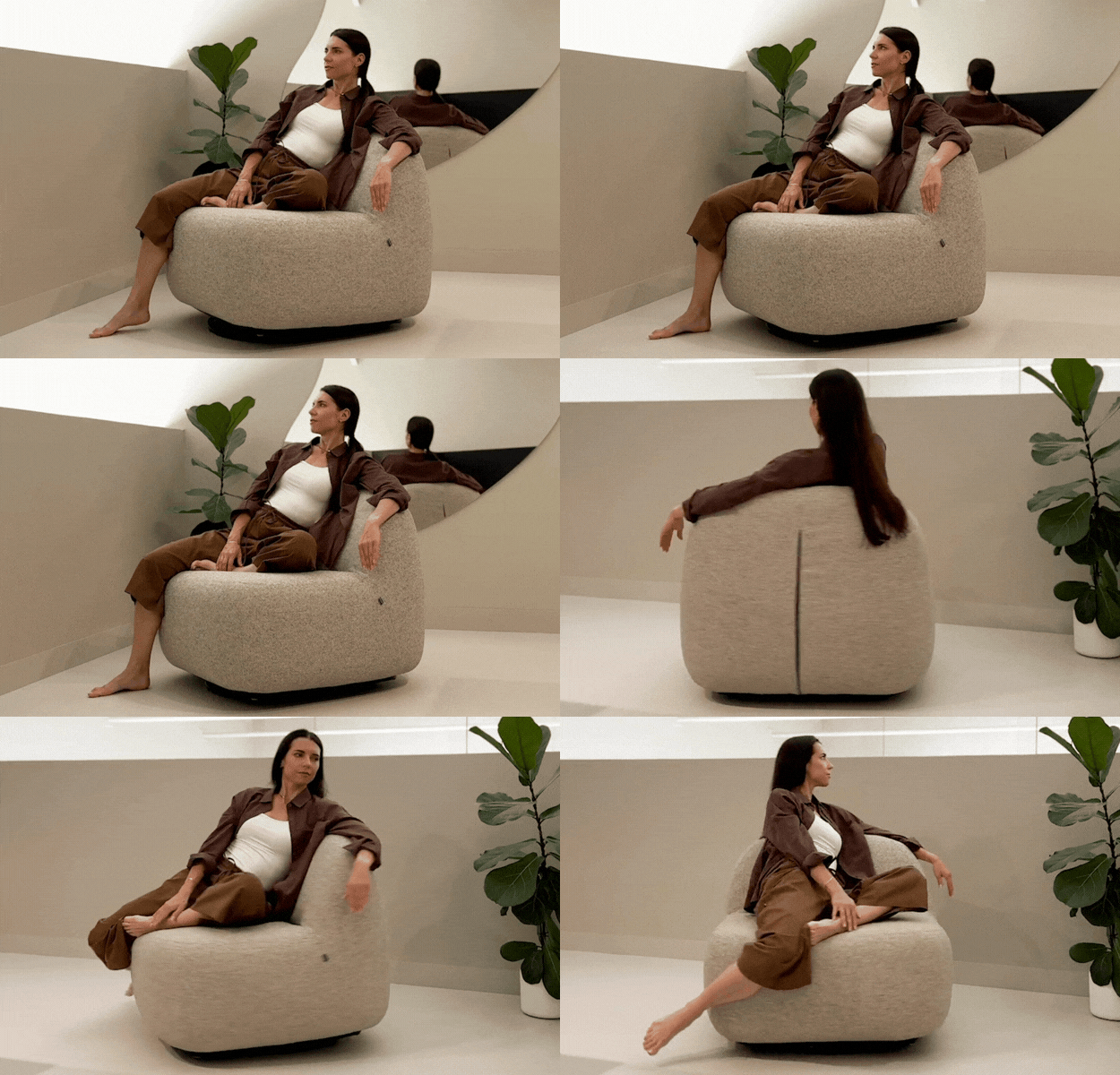
In workplace design, particularly within relaxation areas, employee wellbeing and neurodiversity are increasingly being taken into account. As a result, spaces that support sensory recovery are becoming an important part of modern offices. Swings, rocking chairs, and seating solutions that allow subtle movement help users reduce tension more quickly, improve workplace comfort, and support concentration during everyday tasks.
When designing workspaces, it is therefore worth considering solutions that support the natural human need for movement. Relaxation zones can benefit from rocking chairs (Ox:co, Vieni), seating equipped with swivel rocking bases such as Jelly, rocking furniture such as the Social_swing or conference chairs featuring 3D movement mechanisms. These solutions enable subtle movement while seated, supporting muscle tension regulation, improving sensory comfort, and providing users with a greater sense of freedom and natural interaction with the space.

Seating with a rocking function aligns with the broader wellbeing trend aimed at creating environments that better respond to natural human needs. As a result, rocking is no longer viewed solely as a form of relaxation, but is increasingly becoming a consciously applied tool for designing more user-friendly, wellbeing-oriented workplaces.
*Source: Vestibular Stimulation for Stress Management in Students, Journal of Clinical and Diagnostic Research, 2016
|





 EN
 PL
 DE
 FR


